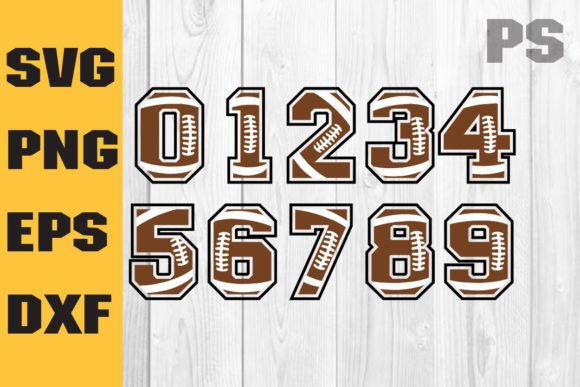
Football Numbers SVG, Football Player
A Designer’s First Look: Bold, Sporty, and Ready for Stitching
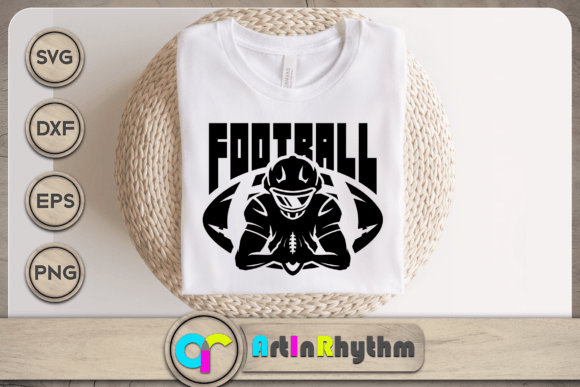
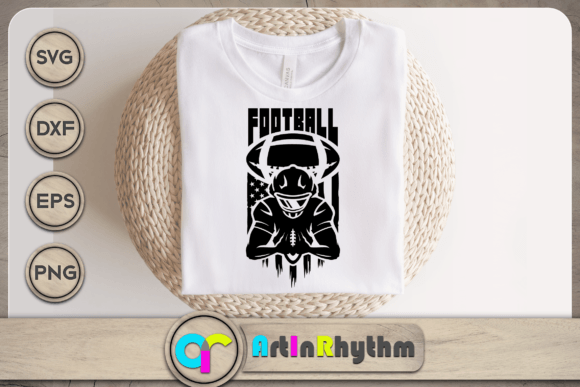
When I opened Football Numbers SVG, Football Player for the first time, I didn’t just see vector shapes—I saw a finished embroidered tote bag hanging in a local boutique: crisp white canvas, navy thread, bold numbers stitched across the front with clean satin-stitched outlines and confident spacing. That’s the mood this design carries—energetic but not chaotic, athletic without being overly aggressive. The numbers are generously proportioned, with subtle beveling and a slight italic lean that hints at motion, while the football player motif (a stylized silhouette mid-stride) anchors the composition without crowding the numerals. It’s clearly built for visibility—not for tiny monograms or delicate heirloom work, but for projects where legibility, impact, and spirit matter most.
Where This Design Truly Shines in Real Embroidery Projects
I tested Football Numbers SVG, Football Player on three real-world items: a cotton twill apron for a youth sports camp, a fleece-lined baby onesie for a newborn football fan, and a structured cotton cap for a high school booster club fundraiser. On the apron, the design held up beautifully—clean fill stitch coverage, no puckering, and the player graphic read clearly even at 3.5 inches tall. On the onesie, I scaled it down to 2.75 inches and used lightweight tear-away stabilizer; the numbers remained sharp, though I did reduce stitch density slightly to avoid stiffness against delicate skin. The cap was trickier—the curved surface required careful hooping and a medium cut-away stabilizer, but the design’s open interior spaces and balanced weight distribution kept distortion minimal.
This isn’t a one-size-fits-all embroidery file. It thrives on medium-to-heavyweight fabrics: sweatshirts, tote bags, tea towels, pillow covers, and structured caps. It also works well for embroidered patches meant for jackets or backpacks—especially when stitched with contrasting thread (think kelly green on black twill or gold on navy denim). For Etsy sellers and small shop owners, it’s a strong candidate for holiday embroidery kits (“Team Santa” baby bibs), personalized graduation gifts, or boutique-branded merchandise for local leagues. As a digital embroidery file, it bridges craft business needs and customer expectations: recognizable, on-brand, and instantly readable.
Use With Care: Fabric, Scale, and Stitching Realities
That said, Football Numbers SVG, Football Player demands thoughtful placement. Avoid it on thin or highly stretchy knits like jersey t-shirts unless you’re using heavy stabilizer and reducing density—it’s got visual weight, and that translates to stitch weight. On dark fabric, test thread contrast thoroughly: light gray or metallic silver can get lost next to charcoal fleece, while bright orange pops but may clash with certain palettes. Tiny hoop sizes (under 4x4 inches) will require scaling down, and doing so risks losing definition in the player’s limbs or number serifs—so always run a test on scrap fabric first.
Curved surfaces (caps, mugs with embroidery sleeves, curved pillow edges) need extra attention to hooping tension and stabilizer choice. Dense fill areas—especially where the player’s shoulder meets the top of the number—can cause buildup if stitched too tightly. And while the design includes clean lines ideal for satin stitch borders, don’t assume every element is optimized for applique; check the layer structure in your embroidery software before converting to applique design format.
What It Adds—And What It Requires—from Your Craft Business
Used well, Football Numbers SVG, Football Player elevates perceived value. Customers recognize sport-themed embroidery as intentional, personal, and celebratory—whether it’s a custom sweatshirt for a little league MVP or a nursery wall banner for a baby’s first season. That recognition builds trust: it signals you understand both design *and* context. For Etsy sellers, pairing this embroidery file with a printable mockup (e.g., a realistic sweatshirt preview with the design centered and scaled) boosts buyer confidence and reduces post-purchase questions. For craft fair vendors, having this ready-to-stitch asset means faster turnaround on custom orders—and consistency across batches.
But professionalism starts before stitching. Always inspect the original SVG and EPS files in Illustrator or your design editor: look for stray anchor points, overlapping paths, or inconsistent stroke weights that could confuse your embroidery software during conversion. Confirm licensing terms before selling finished products—this is a Graphics asset, not automatically cleared for unlimited commercial embroidery use. And never skip the black-and-white mockup test: what reads boldly in color might blur into a muddy gray mass on dark fabric.
Practical Notes Every Embroidery Designer Should Keep Handy
- Test Football Numbers SVG, Football Player on scrap fabric matching your final project’s weight and texture—especially for baby embroidery or custom apparel.
- Check thread color contrast across light and dark backgrounds; consider how thread sheen affects perception on textured fabrics.
- Review stitch density in your embroidery software—reduce fill density by 10–15% for soft fabrics or layered garments.
- Confirm hoop size compatibility before digitizing; some versions may need minor repositioning for smaller hoops.
- Inspect small details at actual stitch size: corners, number tails, and player outline clarity all affect final presentation.
- Use proper stabilizer—cut-away for knits, tear-away for stable wovens, and fusible for lightweight layers like tea towels.
- Verify whether the license permits commercial embroidery use, resale of finished products, or redistribution as part of a craft business bundle.
Final Thought: A Solid, Situational Asset for Makers Who Know Their Audience
Football Numbers SVG, Football Player isn’t flashy or experimental—but it doesn’t need to be. In the Crafts space, reliability matters more than novelty. When your customer asks for “something that says ‘team’ without saying ‘team’,” this design delivers. It fits naturally into sweatshirt embroidery, embroidered patch collections, and personalized gift workflows—not as filler, but as a considered, cohesive piece of visual storytelling. For designers, Etsy sellers, and small shop owners building a library of trusted digital embroidery files, it earns its place not through complexity, but through clarity, confidence, and real-world readiness.